Joe’s “one betrayal is unforgivable” principle
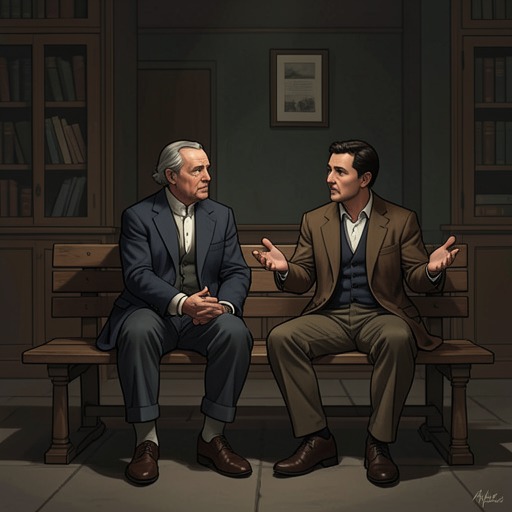
The Sky Is EverywhereJoe Fontaine’s principle that one betrayal cannot be forgiven is both a boundary and a verdict: once he believes Lennie Walker has deceived him, love does not make him feel able to stay. The rule reaches its harshest expression after he sees Lennie with Toby Shaw, when he connects her actions not only to his own hurt but to her sister Bailey Walker. Later, reading Lennie’s poems changes his understanding of the grief surrounding the betrayal, and his return makes the rule less final without erasing the damage it caused.
The Rule and Its First Warning
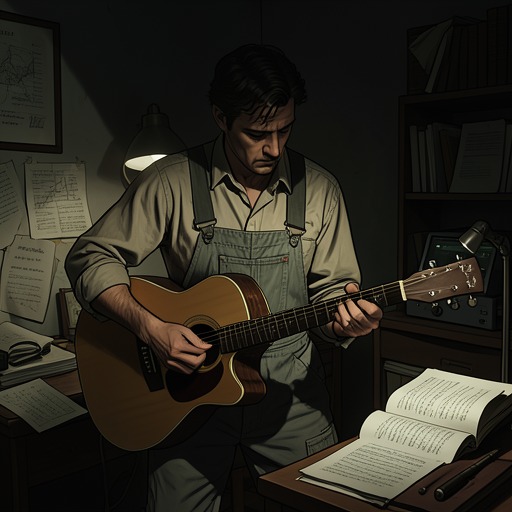
Lennie first registers the rule as an unspoken danger. When Joe asks whether he is being paranoid, she agrees that nothing is wrong, concealing what has happened between her and Toby even after Joe has kissed her. Her thought, “Never cross a horn player,” frames the concealment as a risk she understands but chooses to take. The moment establishes the rule before Joe states it openly: Lennie anticipates that honesty could cost her the relationship, yet the lie also places that relationship at greater risk.
The principle is not presented as an abstract maxim detached from intimacy. Joe’s mistrust becomes acute because Lennie denies what is happening, and the denial continues despite their closeness. When Joe later confronts her, he recalls having told her what happened to him in France and says that she lied repeatedly anyway. The rule therefore rests on his understanding of betrayal as a breach of trust, not simply on jealousy or on Lennie’s attraction to someone else.
The Break with Lennie
The decisive confrontation follows Joe’s discovery of Lennie and Toby kissing. Roses have been brought to Joe, but their romantic promise cannot settle the conflict. Once the door closes behind his mother, Joe rejects the flowers as an easy repair and tells Lennie that he is already in love with her but cannot be with her: whenever he closes his eyes, he sees her with Toby. Love remains present in the scene, but it does not cancel the image of the betrayal or restore trust.
When Lennie tries to explain, Joe refuses to hear the explanation. He says he cannot forgive her and that this is simply how he is; he asks her to leave him alone. His refusal makes the principle sound absolute, and Lennie understands that his hurt and anger have overtaken his love. The conflict is sharpened when Joe points toward the place where Lennie and Toby were together and asks what she expected him to feel after seeing them kiss.
Joe then names the injury in terms that reach beyond their romance. He first says he cannot be with someone who could do that to him, then adds that he cannot be with someone who could do that to her sister. Lennie recoils and runs. By invoking Bailey, Joe turns the confrontation from a dispute over their couple’s trust into a judgment about Lennie’s conduct toward someone she loved. His words make the rule morally weightier, but also more devastating: the rejection now bears on Lennie’s grief and guilt as well as on Joe’s hurt.
The Rule Under Pressure
Lennie’s response is not to produce an explanation that immediately changes Joe’s mind. Instead, she and Gram cut up Wuthering Heights with garden shears. Lennie’s cuts move through the novel’s lovers and their choices, but also through Joe’s jealousy, anger, judgment, and inability to forgive, and through her own deception, confusion, poor judgment, and grief. The act gives physical form to her frustration with an all-or-nothing rule while acknowledging that her own actions are part of what has broken the relationship.
The later change comes through a different object: Lennie’s box of poems. Joe says that, after Lennie brought the roses, he read the poems repeatedly, trying to understand why she had been with Toby. Reading them together, he began to imagine what she had been going through and to recognize that Toby, too, had been grieving. He does not claim that the poems make the betrayal harmless; rather, they allow him to see it within a larger situation of shared loss. His understanding shifts from the stark scene he witnessed toward the grief that had shaped it.
Reconciliation and Continuing Vulnerability
Joe’s return also includes an apology. He clarifies that he is not apologizing for reading the poems, but for what he said about Bailey. He now understands from Lennie’s writing how much those words would hurt her. That distinction matters: he does not retract the fact that he was wounded, but he recognizes that his appeal to Bailey compounded Lennie’s pain. The rule against forgiveness has not prevented him from seeing the injury he caused in enforcing it.
When Joe takes Lennie’s hand and kisses it, the tenderness is paired with a question: whether she will betray him that way again. Lennie answers that she never will and says she wants to be with him forever. His return thus restores their closeness without pretending that trust is automatic; he asks for reassurance, and she gives it. The principle that once seemed to end the relationship becomes a test the couple must face through acknowledgment, understanding, apology, and a promise. The scene leaves the hurt visible while allowing love to resume.